Table of contents
Beyond the fingerprick, CGM has become a mainstream health technology category. Abbott controls 52.83% of 2025 CGM revenue, Dexcom 33.89%, and Medtronic 10.10%, so those choosing among the best continuous glucose monitors are really choosing among a handful of ecosystems with very different strengths.
That matters because continuous glucose monitoring isn't just for insulin-dependent diabetes anymore. People now use CGMs to spot post-meal spikes, compare training nutrition, test whether sleep disruption shows up in glucose patterns, and build preventive routines before metabolic problems become obvious. The hardware is improving, but the bigger shift is access. An NYU Langone review notes that the first OTC CGM was approved in March 2026 for people with type 2 diabetes not on insulin and for people without diabetes who want diet and activity insights.
This guide focuses on jobs to be done. Some devices are best for insulin users who need alerts and integration. Others work better for athletes, quantified-self users, or adults who want OTC access without the friction of a prescription. I'll also call out a practical issue most comparison lists miss: a CGM is only as useful as the system you use to interpret it. That's why it helps to track the broader innovations in health technology shaping connected care.
1. Dexcom G7 15 Day
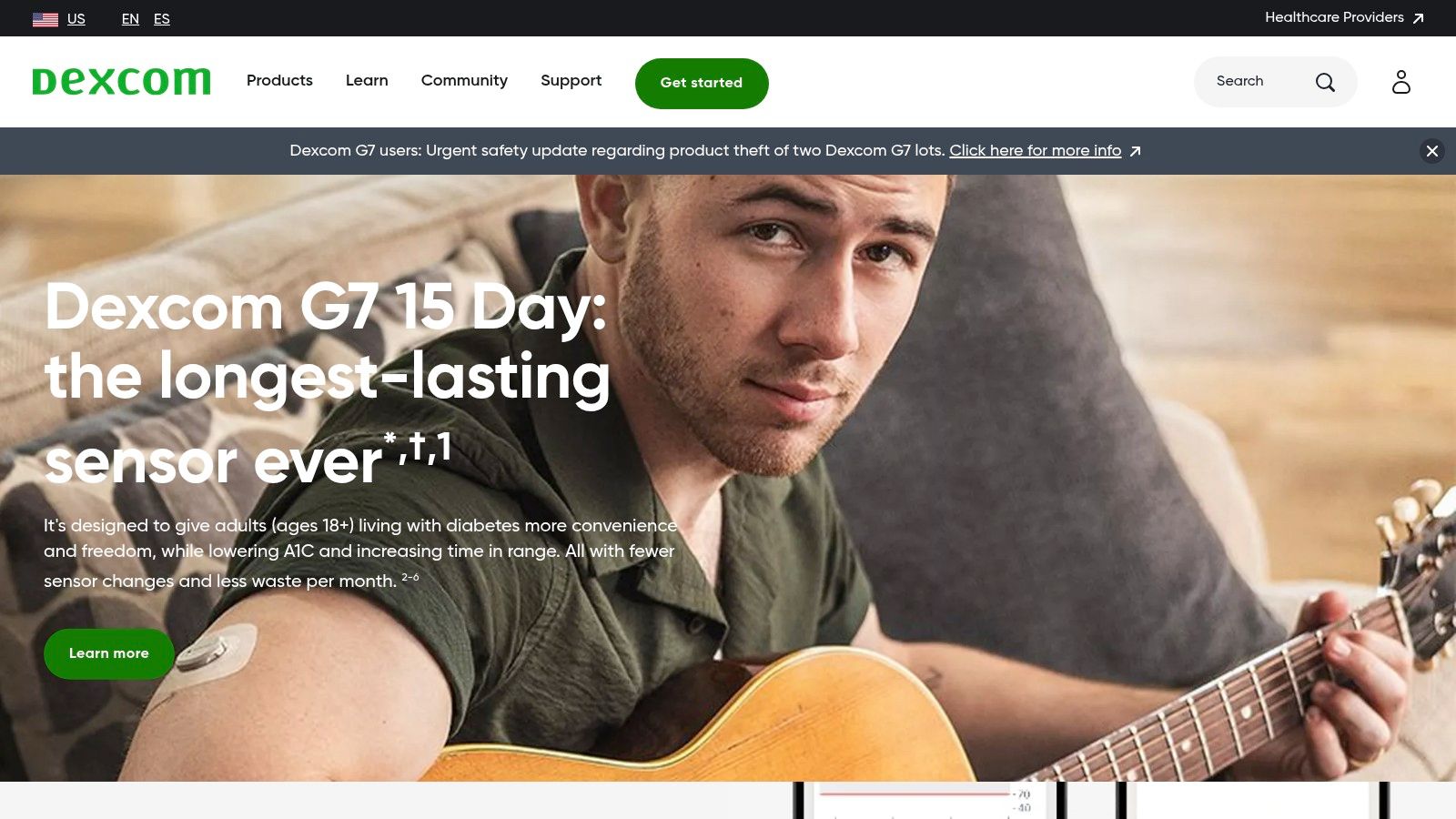
Prescription CGM buyers usually end up choosing an ecosystem as much as a sensor. Dexcom G7 15 Day stands out for a simple reason: it handles the core clinical job well while fitting into more digital health setups than many rivals.
For the user whose job to be done is real-time visibility with alerting, app support, and room to build a longer-term data workflow, this is one of the strongest options in the category. I put it high on the list for insulin users, people using automated insulin delivery, and tech-oriented patients who care about where their data can go next.
Best fit
G7 15 Day makes the most sense for three groups. Insulin users who need dependable alerts. People who want broad compatibility with phones, watches, and diabetes tech. Users who are already thinking about data integration, including whether their CGM can feed a platform such as OneTwenty later instead of staying trapped inside a single app.
The practical advantage is flexibility. You get real-time readings, trend arrows, and a mature software ecosystem that clinics and device makers already know how to support. That matters in day-to-day care because a CGM is more useful when sharing, reviewing, and acting on the data is straightforward.
Cost is the main trade-off. Dexcom often prices at the premium end, and some users will pay extra for that wider compatibility. There was also a limited recall involving some receivers, so checking current guidance directly with Dexcom is a sensible step before you buy or refill.
It is also a strong pick for people using CGM beyond standard diabetes management. If the goal is to connect glucose trends with meals, training, sleep, or broader preventive care, the sensor works better when paired with a clear interpretation plan. The wider benefits of continuous glucose monitoring depend less on the hardware alone and more on whether the system around it helps you turn readings into decisions.
2. Dexcom Stelo
Dexcom Stelo exists for a different job. It isn't trying to be the best option for insulin dosing. It's built for adults who want CGM access without a prescription and who care more about patterns than alarms.
That distinction matters because most "best CGM" guides still focus on insulin-dependent use. One of the biggest gaps in current content is the lack of practical guidance for OTC CGMs used for metabolic optimization in people without diabetes or in people with type 2 diabetes not using insulin, as highlighted in the earlier NYU Langone discussion.
Who should buy it
Stelo makes sense for three groups:
Metabolic health users: Adults who want to see how meals, sleep, and activity change glucose trends.
Type 2 diabetes without insulin use: People who want more visibility than occasional fingersticks provide.
Data-curious beginners: Users who want lower friction entry into CGM without starting in a medical supply workflow.
The upside is simplicity. No prescription, app-based trend insights, transparent access, and a 15-day wear pattern make it much more approachable than traditional prescription setups.
The downside is equally important. Stelo doesn't provide urgent glucose alarms and isn't indicated for people using insulin. If your main need is safety alerting, not lifestyle feedback, you're in the wrong product lane. You can review current availability and details at Dexcom Stelo.
3. Abbott FreeStyle Libre 3 Plus
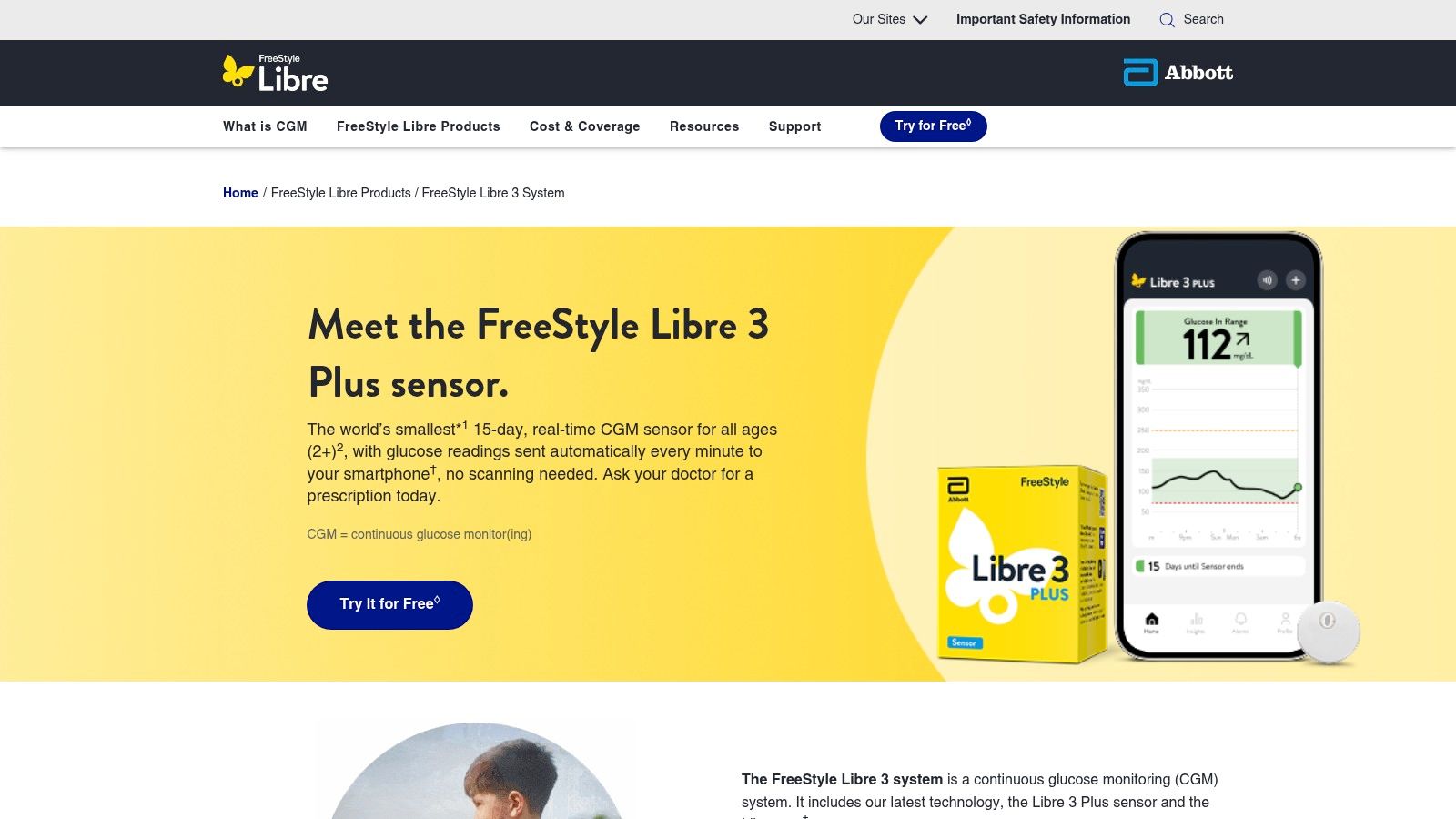
FreeStyle Libre 3 Plus is the Abbott answer for users who want a low-profile sensor, real-time smartphone readings, and broad pharmacy access. If your job to be done is "I want something small, practical, and easy to refill," Libre 3 Plus is one of the strongest choices.
Abbott has scale on its side. The company leads the global CGM market by revenue, and in practice that often translates into easier pharmacy access and fewer surprises when you're trying to stay consistently supplied.
Real-world trade-offs
Libre 3 Plus is especially attractive for people who hate bulky wearables. The on-body profile is small, and that makes a difference for people who train, sleep on their side, or just don't want a device constantly catching on clothing.
Its limits are mostly ecosystem-related. Some features depend on app compatibility or partner integrations, so users with existing pump or automation workflows should confirm fit before switching. Product details are available through Abbott's FreeStyle Libre 3 page.
For a broader metabolic-health workflow, the sensor matters less than what you pair with it. A platform that interprets continuous glucose monitoring as a biomarker can be more valuable than another decimal point of accuracy on paper.
4. Abbott FreeStyle Libre 3
Millions of CGM sensors are now used worldwide, and products in this tier win less on novelty than on whether people can refill them, tolerate wearing them, and keep using the data. FreeStyle Libre 3 remains a strong fit for that job.
I usually place Libre 3 in the "value-first prescription CGM" category. It suits someone who wants continuous readings on a phone, a small sensor, and a workflow that does not require a lot of setup. For a person with prediabetes, early type 2 diabetes, or a clinician-guided nutrition experiment, that can be the right level of device.
The trade-off is straightforward. Libre 3 is practical, but it is not the longest-wear option in this guide, and buyers should not assume every Libre model supports the same integrations. If your job to be done includes pump pairing, automation, or exporting data into a broader health-tech stack, check compatibility before you start. That matters more than a marketing spec sheet.
Accuracy history is one reason Abbott stays in the conversation. In an earlier head-to-head study, the FreeStyle Libre 4P showed lower MARD than Medtronic Enlite under home conditions. That study does not give a Libre 3 spec, but it does support Abbott's long-standing reputation for clinically credible sensor performance.
Future-proofing is the other question I ask. A CGM is more useful when its data can move into the tools you already use for coaching, nutrition tracking, or longitudinal metabolic monitoring, including platforms such as OneTwenty. If that data path is clumsy, even a good sensor becomes harder to live with.
5. Abbott FreeStyle Libre 2 Plus
Libre 2 Plus is the "stay with what works" option. I usually recommend it when payer rules, clinic familiarity, or an existing Libre 2 workflow matter more than chasing the newest software ecosystem.
Some users don't need the latest platform. They need a sensor they already understand, with optional alarms and a workflow their pharmacy, clinician, and insurance plan already recognize. Libre 2 Plus serves that job well.
When it makes sense
Pick Libre 2 Plus if these points sound familiar:
You already use Libre 2: The learning curve stays low.
Your plan prefers established workflows: Familiarity can reduce refill friction.
You want optional alarms without changing systems: That's a reasonable reason to stay put.
The downside is future-proofing. Libre 3 family products are where a lot of newer momentum sits, so if you're building toward more advanced integrations, Libre 2 Plus may feel like a holding pattern rather than a long-term platform. You can check the latest details at Abbott's FreeStyle Libre 2 page.
6. Abbott Libre Rio
Libre Rio is Abbott's OTC pathway for adults with type 2 diabetes who aren't using insulin. That makes it one of the most important category expansions, even if it won't be the right fit for everyone reading this.
The main appeal is access. You don't have to go through prescription channels just to get CGM-level data for self-management. For the right user, that's a meaningful shift from "I should probably track this better" to having a tool in hand.
Best for OTC diabetes self-management
Libre Rio is best viewed as an access product, not an everything product. It broadens entry for appropriate users, and Abbott positions it to meet iCGM safety and efficacy standards.
What you shouldn't assume is universal retail smoothness right away. Availability may still vary by local channels, and Abbott hadn't posted universal U.S. retail pricing at the time reflected in the plan. That means this is a device to verify locally before you build a routine around it. Start with Abbott.
A lot of users in this lane don't just need data. They need translation. That's where many comparison articles fail. They tell you which sensor exists, but not how to turn readings into food, exercise, or medication conversations.
7. Eversense 365 (Senseonics / Ascensia)
Eversense 365 solves a specific problem better than any patch-based CGM here. It is the option for people who want the fewest sensor insertions possible over a full year.
That makes it a strong fit for a narrow, high-conviction user. I usually put this in front of people who are burned out on frequent sensor changes, who have recurring adhesive reactions, or who keep losing disposable sensors during work, training, or daily life.
Best for users who want the lowest insertion frequency
The annual implant changes the job-to-be-done. Instead of asking, "Which sensor has the best app?" the better question is, "Do I want to handle CGM once a year in a clinic, or every week or two on my own?" For the right person, that trade is easy.
The practical advantages are clear:
One long wear cycle: You replace repeated self-insertions with a scheduled office procedure.
On-body vibration alerts: Alerts still reach you even when your phone is out of range or buried in a bag.
Removable transmitter: You get more flexibility at the skin surface than with a fully fixed patch sensor.
The trade-offs are just as real. You need insertion and removal appointments, access to a trained clinic, and insurance approval or a clear cash-pay path. Some users prefer self-service wearables because they can start quickly and swap sensors at home. Others would rather accept clinic logistics once and stop thinking about insertions for months.
This is also a future-proofing question. If you want glucose data to live inside a broader health workflow, check how well your readings can be reviewed alongside labs such as hemoglobin A1c, and whether your preferred platform can pull in CGM data without locking you into a dead-end app experience.
Implantable CGM is not the mainstream choice. For the right user, it can be the most practical one.
8. Eversense E3
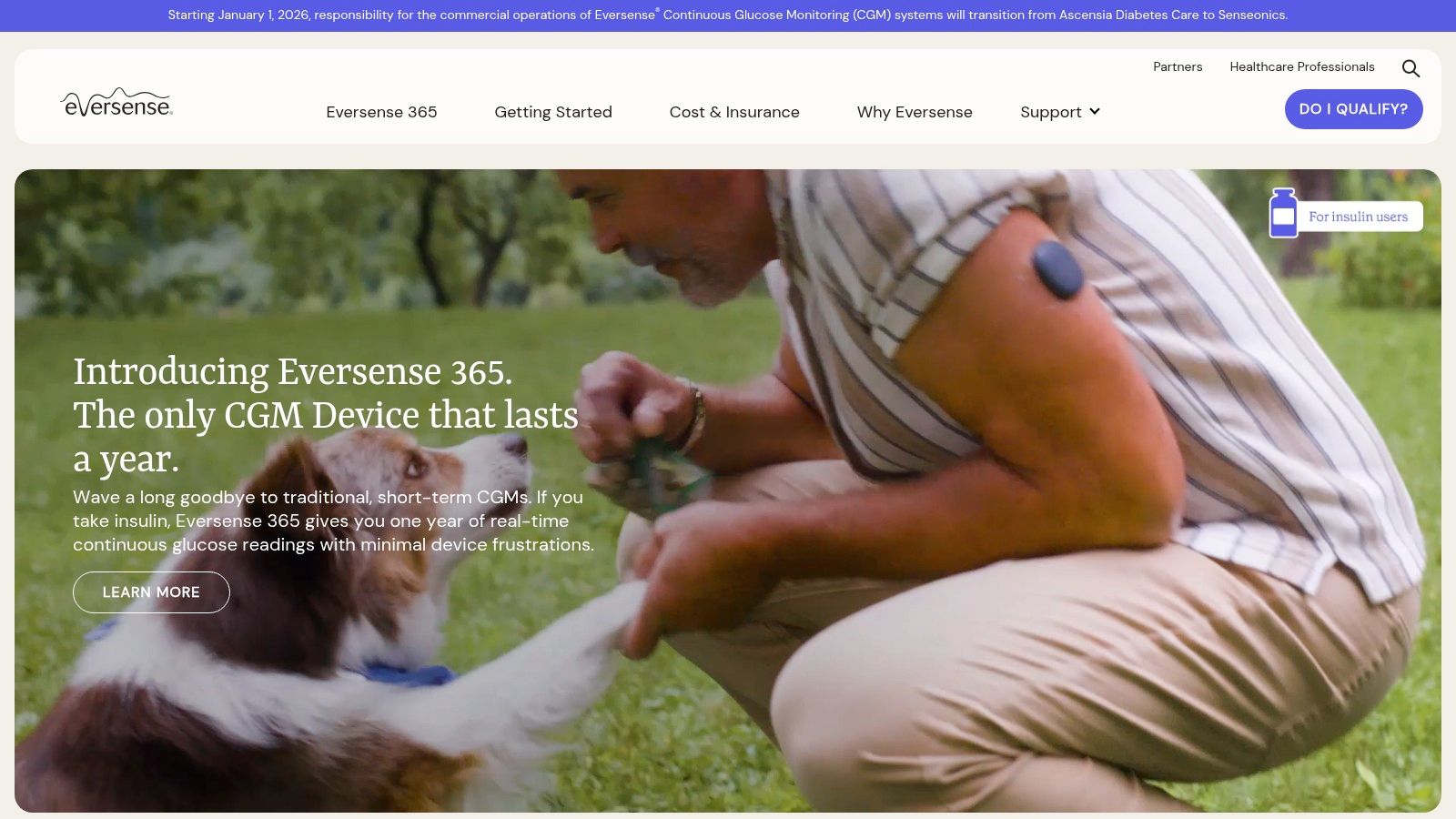
Eversense E3 fits a specific job better than the annual implant. It suits users who want to get off the treadmill of frequent sensor changes but are not ready to commit to a full year between procedures.
That shorter commitment horizon matters in practice. I see E3 as the trial run for the implantable category. You still get the core appeal of long wear and on-body vibration alerts, but with a lower switching cost if you decide implantable CGM is not the right fit for your routine, skin tolerance, or clinic access.
Best for long-wear users who want a lower-commitment implant
E3 is a sensible choice for someone who dislikes adhesive turnover, wants alerts that do not depend entirely on a phone, and prefers a middle ground between disposable sensors and the 365 model. It can also fit people who are curious about implantable CGM but want to test the workflow first, including insertion visits, transmitter wear, and day-to-day comfort.
This is also where the broader decision framework matters. A CGM is not just a sensor choice. It is a data workflow choice. If you plan to use glucose data for behavior change or metabolic risk tracking, make sure your readings can be reviewed alongside longer-range markers such as hemoglobin A1c trends, and check whether your preferred platform can bring those inputs together in a useful way.
The trade-offs are straightforward. E3 still requires an office procedure, scheduling, and insurance or cash-pay planning. For some users, that is easier than frequent self-insertion. For others, it is the main reason to skip implantable CGM altogether.
If your priority is future-proofing, ask a plain question before choosing: will this device fit the way you want to use data next year, not just this month? That is the right lens for comparing E3 with disposable CGMs and with the longer-horizon Eversense option noted earlier.
9. Medtronic Simplera CGM
Medtronic Simplera CGM is a better fit for smart MDI users than for people shopping broadly across all ecosystems. If you're already in Medtronic's orbit, especially with InPen workflows, Simplera deserves attention. If you're not, it's more of a targeted option than a universal one.
That distinction matters because Medtronic still has a meaningful place in the CGM market, but the company isn't the default standalone recommendation for most non-pump users.
Where it fits
Simplera's appeal is straightforward. It offers an all-in-one disposable design, app-based real-time readings, and a smaller form factor than older Medtronic sensors.
I'd look at it if you want:
Smart MDI alignment: Especially if InPen is part of your routine.
A simpler Medtronic entry point: Better for users who don't want older, bulkier CGM experiences.
A pharmacy-oriented workflow: Useful where copay support is available.
The practical caution is availability and compatibility. Because it's newer, local pharmacy access may vary, and you should verify fit with your current hardware and software before making a switch. Product details are on the Medtronic Simplera CGM page.
10. Medtronic Simplera Sync
CGM use keeps expanding, but Simplera Sync is still a narrow-choice product. It makes the most sense for one job: pairing with the MiniMed 780G for people who want Medtronic's latest integrated sensor route.
That makes this a platform decision first. The sensor matters, but the bigger question is whether you want your CGM, insulin delivery, alerts, and reporting to live inside the same Medtronic workflow.
Best for 780G users who want tighter system fit
Simplera Sync stands out because it was built for compatible Medtronic automated insulin delivery. For insulin users who prioritize closed-loop convenience over ecosystem flexibility, that matters more than a long feature checklist.
The trade-off is lock-in. If your job to be done is experimentation, broad app compatibility, or pulling data into several consumer health tools, this will feel restrictive. If your job is keeping the 780G workflow straightforward and reducing setup friction inside one manufacturer's system, the limits are easier to accept.
I would frame it this way:
Best fit: MiniMed 780G users who want Medtronic-native integration
Less ideal for: athletes, non-insulin users, and people comparing standalone CGMs across multiple apps
Key question before choosing: do you want the best sensor for general use, or the sensor that best fits your insulin delivery system?
That distinction matters more as CGMs become a standard part of diabetes care. Integrated monitoring is gaining ground, but future-proofing still depends on how you expect to use your data. If you want a single-vendor setup, Simplera Sync is coherent. If you care about exporting data, comparing platforms, or feeding insights into broader health tools such as OneTwenty, check compatibility before you commit. Current details are on the MiniMed 780G product page.
Top 10 CGMs: Side-by-Side Comparison
Device | Target audience | Key features | Integration & compatibility | Wear duration & alerts | Access / Value |
|---|---|---|---|---|---|
Dexcom G7 15 Day | Insulin users & AID seekers | 15‑day wear, ~30‑min warm‑up, trend arrows, high accuracy | iCGM, broad third‑party apps & AID system support | 15 days; real‑time alerts, sharing | Prescription; strong ecosystem; cash price may be higher |
Dexcom Stelo | Adults not using insulin, wellness users | OTC access, 15‑day wear, trend insights, no urgent alarms | App‑based insights; not for insulin dosing/AID | 15 days; trend-focused, no urgent alarms | OTC purchase, FSA/HSA eligible, transparent pricing |
Abbott FreeStyle Libre 3 Plus | Users wanting low profile + AID potential | Very small sensor, minute‑by‑minute readings, AID‑ready design | Libre apps (LibreLink/LibreView), AID integrations possible | 15 days; real‑time smartphone readings | Wide pharmacy distribution; often lower insured OOP via copays |
Abbott FreeStyle Libre 3 | Value & low‑profile users | Small sensor, minute‑by‑minute real‑time readings | Libre ecosystem, sharing & remote view | 14 days; real‑time app alerts | Strong pharmacy coverage and copay programs |
Abbott FreeStyle Libre 2 Plus | Existing Libre2 users & payer‑driven workflows | Extended 15‑day variant, optional glucose alarms | Libre2 platform; familiar workflow | 15 days; optional alarms | Broad retail/pharmacy access; payer friendly |
Abbott Libre Rio | OTC adults with T2D not on insulin | OTC iCGM pathway, meets iCGM standards | Designed for consumer access; app compatibility varies | CGM‑level readings (check product specs) | OTC rollout in progress; pricing/availability vary |
Eversense 365 (Senseonics/Ascensia) | Users wanting minimal insertions & strong on‑body alerts | 365‑day implantable sensor, removable rechargeable transmitter | iCGM designation; app + transmitter integration | 365 days; on‑body vibration alerts independent of phone | In‑office insertion/removal; insurance & clinic availability vary |
Eversense E3 | Users preferring 6‑month cycle | 180‑day implantable sensor, removable transmitter | FDA‑approved; app management & on‑body alerts | 180 days; on‑body vibration alerts | Requires office procedures; coverage varies by insurer |
Medtronic Simplera CGM | Smart MDI (InPen) users & non‑pump patients | Disposable all‑in‑one sensor, app‑driven readings | Designed to pair with Smart MDI/InPen workflows | Disposable sensor; real‑time app alerts | Pharmacy copay assistance for eligible patients; new product availability |
Medtronic Simplera Sync | MiniMed 780G users (closed‑loop) | Sensor tuned for 780G AID integration, simplified form factor | Tight integration with MiniMed 780G closed‑loop system | Used in closed‑loop; system alerts via pump/app | Indicated for compatible Medtronic AID only; DME/pharmacy coverage depends on plan |
Connecting the Dots: From Data to Healthspan
The best continuous glucose monitors aren't all solving the same problem. Dexcom G7 15 Day is the strongest fit for users who need high-function prescription CGM with broad interoperability. Dexcom Stelo and Abbott Libre Rio make more sense when access and lifestyle insight matter more than insulin alerts. Libre 3 Plus and Libre 3 sit in the practical middle, especially for users who want low-profile sensors and dependable pharmacy access. Eversense stands apart for people who prioritize long wear and fewer insertions. Medtronic's options are most compelling when they slot into an existing Medtronic therapy setup.
Accuracy still matters, but it isn't the whole story. In one 2025 review, the Dexcom G6 was cited at approximately 9% MARD and placed ahead of many competing devices for measurement precision. That's useful context, especially for users who want the most dependable glucose signal possible. But in practice, a slightly less ideal sensor that you can afford, replace, and interpret consistently often beats a technically stronger device that doesn't fit your life.
What usually breaks a CGM experience isn't the sensor. It's the gap between data and action. A Healthline discussion of CGM use points to a common user problem: people can see a constant stream of readings, but many still end up asking what to do with the data because device reviews rarely connect CGM outputs to diet, exercise, protocols, or clinician-guided plans in this overview of how continuous glucose monitors work and are chosen.
That's why I recommend choosing by job to be done first, then by sensor specs. If you're an insulin user, prioritize alerts, interoperability, and therapy fit. If you're an athlete or metabolic-health user, prioritize access, wear comfort, app quality, and whether the data changes your decisions. If you care about privacy and future-proofing, look closely at the app ecosystem, data export options, and whether your CGM can plug into a broader health platform instead of becoming another isolated dashboard.
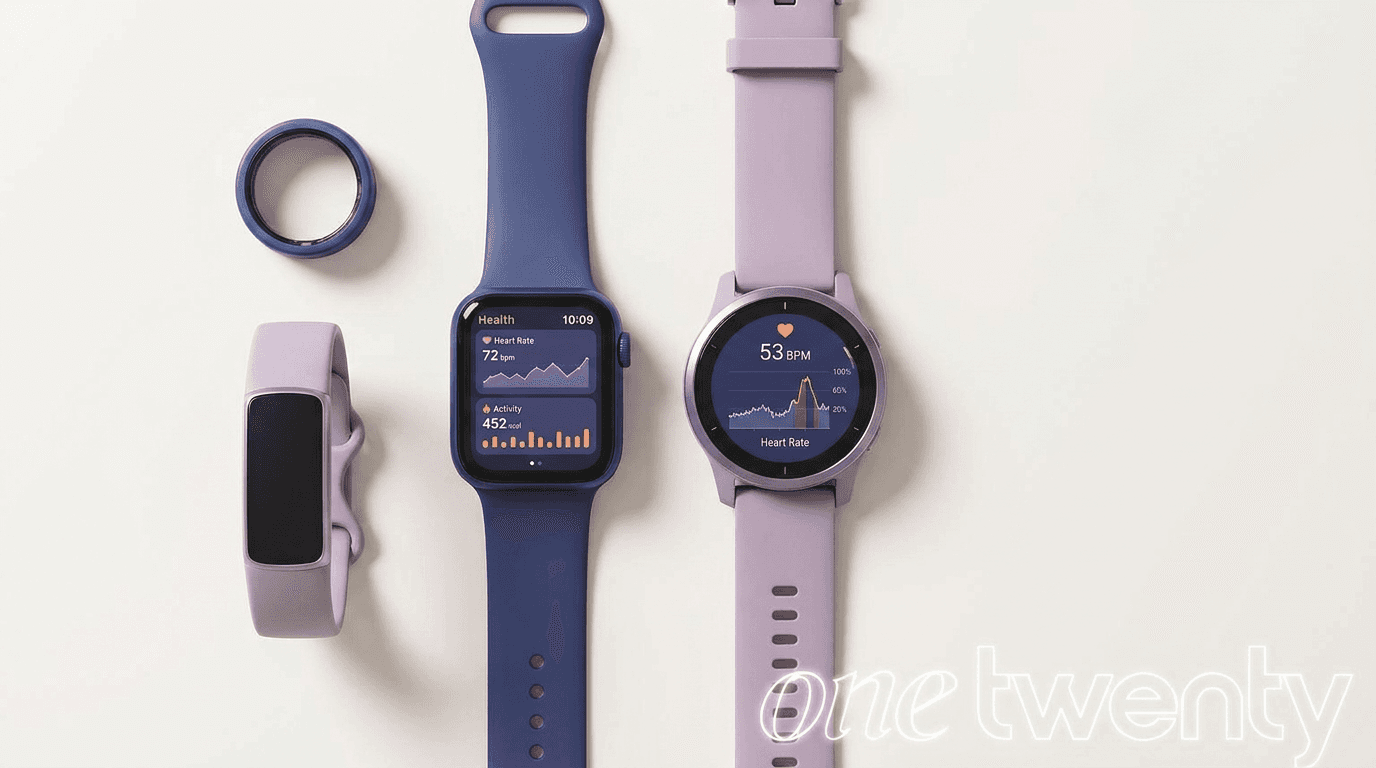
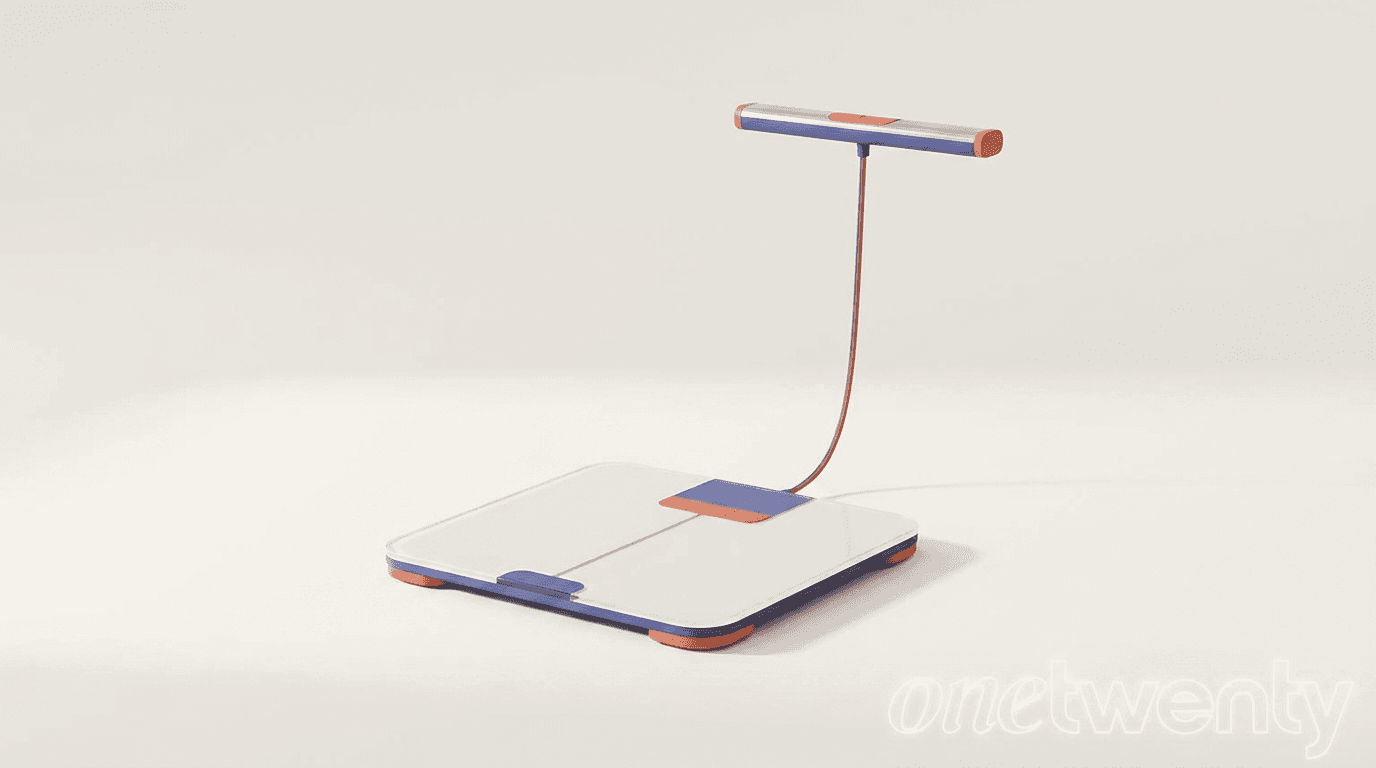
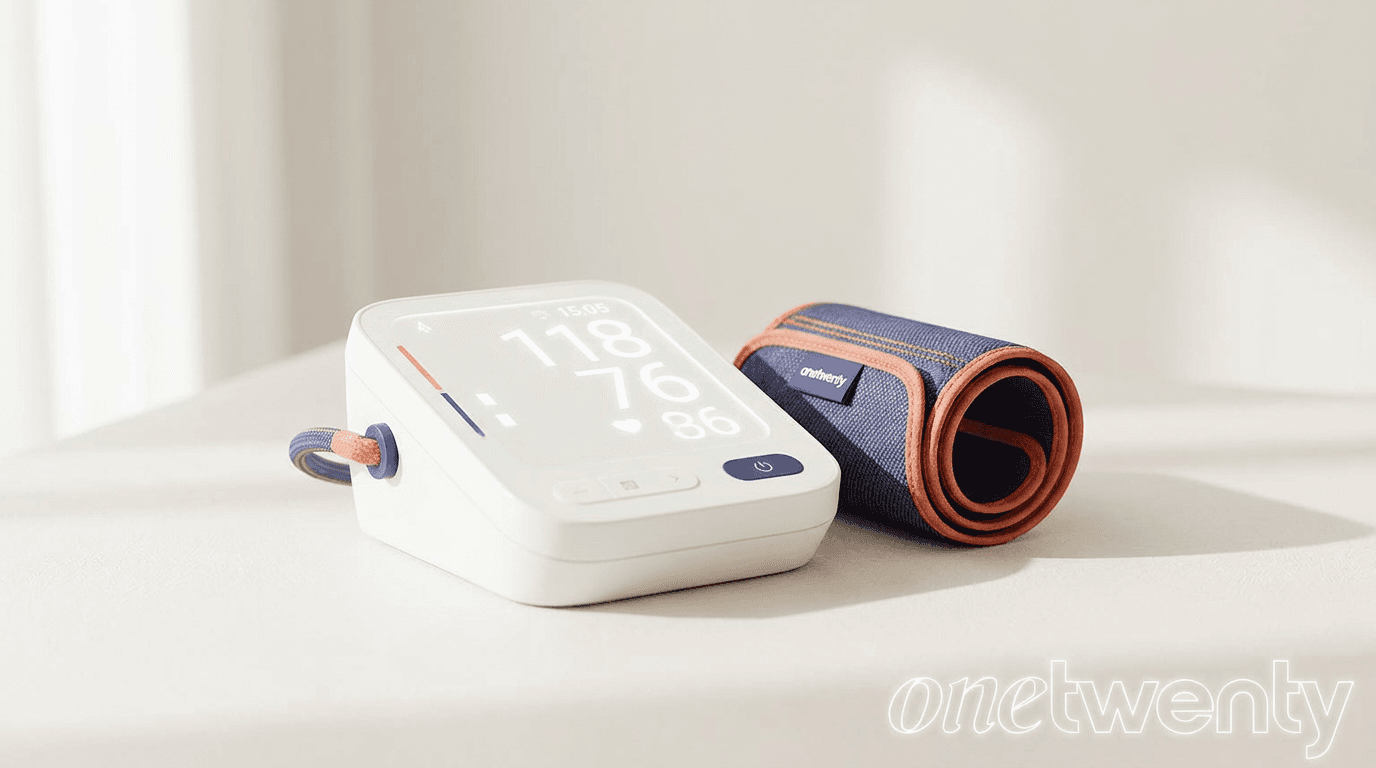
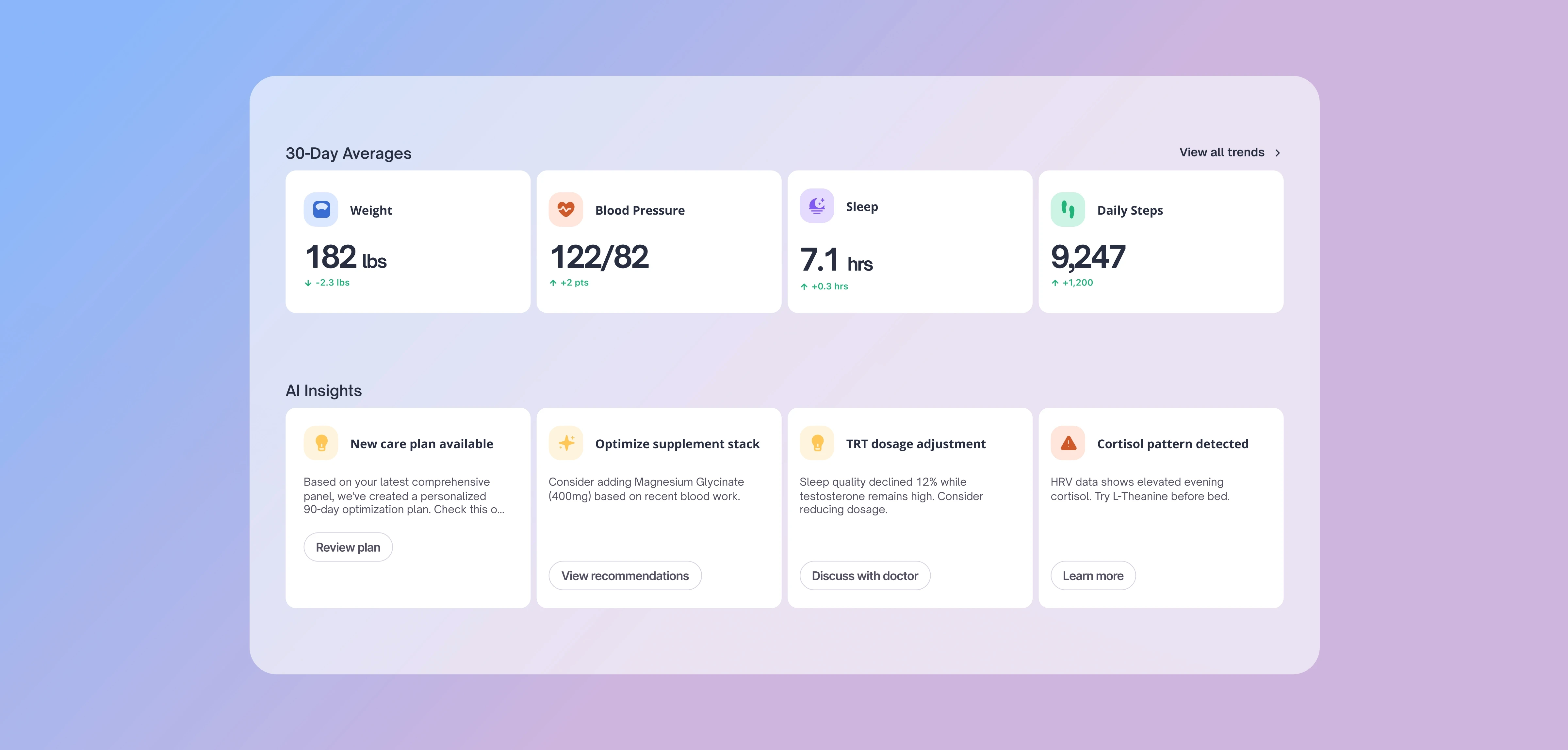
For users thinking beyond device shopping, OneTwenty is relevant because its model is built around unifying wearable data and lab testing into a broader preventive-health workflow. That doesn't replace the need to choose the right CGM, but it does address the larger question many users eventually run into: how to connect glucose data with the rest of their biology in a way that supports better decisions over time.
If you want your CGM data to do more than generate graphs, OneTwenty is worth a look. It connects wearable and biomarker data into a single preventive-health view, which is exactly what many CGM users need once they move past basic tracking and start asking what to change next.
How OneTwenty Works
Not your average
Checkup.
Every life stage brings new biological demands. Tracking the right metrics at the right time helps you adapt, optimize performance, and extend both lifespan and healthspan.
Your Annual Physical
Manual Data Processing
Guesswork Trend Detection
Once-a-year physical
Reactive, tested when sick
No data between visits
Once a year testing
Delayed Results
One-size dosing, set and forget
Real-Time Trend Insights
Daily smart-device data
Automated Data Sync
Quarterly Biomarker Tests
Optimal, personalized targets
Plain-language AI insights
Medications titrated to your data
Built to extend healthspan

Frequently Asked Questions
Clarity before
you commit
Answers on setup, scale, and support to remove blockers.